
Saturday, January 5, 2008


64 Interview Questions
How to answer questions like:
read the list
- What are your greatest strengths?
- Why should I hire you?
read the list
Advice from Bill Gates

In almost every job now, people use software and work with information to enable their organisation to operate more effectively...
A solid working knowledge of productivity software and other IT tools has become a basic foundation for success in virtually any career.
Beyond that, however, I don't think you can overemphasise the importance of having a good background in maths and science...
Communication skills and the ability to work well with different types of people are very important too...
I also place a high value on having a passion for ongoing learning. When I was pretty young, I picked up the habit of reading lots of books.
It's great to read widely about a broad range of subjects. Of course today, it's far easier to go online and find information about any topic that interests you.
Having that kind of curiosity about the world helps anyone succeed, no matter what kind of work they decide to pursue.
Richard Arens
Who?
The 1st person to buy oil at $100 a barrel. He lost about $600 on the transaction.
The 1st person to buy oil at $100 a barrel. He lost about $600 on the transaction.
read the storyThe trader has been named by US and British media as Richard Arens who runs a one man oil brokerage, ABS.
"The magic figure was hit apparently on the back of a single trade, rumoured to be a local intent on fame," Sucden analysts wrote in a commentary Thursday on the record breaking deal.
Arens offered 100,000 dollars on the New York market on Wednesday for 1,000 barrels of oil, producing the much talked of 100 dollars per barrel which sparked anguish across the financial markets.
He later sold on the contract for slightly below 100 dollars, taking a 600 dollar loss.

Friday, January 4, 2008

Inflation or Recession?
The Fed thinks inflation is a bigger risk than it was in 2001, and bigger than Wall Street and many prominent economists think. That forces the Fed to accept a greater risk of recession than it did in 2001. That could mean either fewer rate cuts than anticipated by futures markets, which see the Fed’s short-term rate target falling to 3% by year-end from 4.25% now, or a quicker reversal of the rate cuts....
The most obvious inflationary threat is from oil. It has risen to almost $100 a barrel now from $61 at the end of 2006. That has sent the 12-month overall inflation rate up sharply, to 4.3% in November. By contrast, oil hovered just at just less than $30 for most of 2001 before sinking after the Sept. 11 terrorist attacks, and inflation ended the year at 1.6%....
The Fed, by allowing inflation to consistently run higher than its preferred range, risks feeding higher expectations of inflation in the public, which will make it harder to get inflation back down, Mr. Elmendorf noted.
from WSJ's Greg Ip

I like how they exclude food and fuel, because nobody buys those things.
December Unemployment Rate: 5%
The nation's labor market worsened in December to the weakest level since the shock that followed Hurricane Katrina, as the problems in housing and mortgages took a bite out of job opportunities.Employers added far fewer jobs in the month than had been forecast, while the unemployment rate shot up to 5 percent, which was a two-year high, according to a government report Friday...
"Yes, job creation is slowing, but 5 percent unemployment does not a recession make," said Rich Yamarone, director of economic research at Argus Research.
read the CNN story


Remember that while unemployment is rising, the unemployment rate is still in the range of full employment.
Thursday, January 3, 2008
My New Toy


Specs:
Overall Length: 15.1 Inches
Blade Length: 9.7 Inches
Cutting Edge Length:9.2 Inches
Blade Steel: 12C27 @ 60 rc
Blade Thickness: .10" tapered to .020" at the Point
Weight: 11 Ounces
Balance is just forward of the Bolster(on the Pinch)
Next up is a custom steak knife from them.
Oil Hits $100 a Barrel
Oil prices, after taking an initial dip on a weekly government report on inventory levels, crossed the $100 threshold Thursday and continued a six-year, five-fold spike driven by surging demand and limited supply.U.S. light crude for February delivery crossed $100 a barrel around 11:30 ET on the New York Mercantile Exchange and hit a new all-time trading high of $100.09 later in the session before slipping to settle at $99.18 a barrel, down 44 cents.
On Wednesday, oil briefly touched $100 for the first time - although that amount was paid by one trader who bought one contract - before settling at the end of the day at a record $99.62....
The inventory report is just the latest mover in a market that is hyper-sensitive to news. Oil prices have surged five-fold in the last six years, going from under $20 a barrel in early 2002. In 2007 alone, crude jumped nearly 60 percent...
Adjusted for inflation, oil is at or near the prices of the early 1980s. At that time, following the Iranian revolution and the outbreak of the Iran-Iraq war, oil traded in the high $30-a-barrel range, the equivalent of between $92 and around $103 a barrel in current prices, depending on the contract cited and the inflation calculation used.
Wednesday, January 2, 2008
Blog Suggestions, Comments, and Feedback
Please offer any comments and constructive criticism about the blog or the class here.
Be civil.
Be civil.
Is Starbucks a Competitive Force?
read the entire articleDon't Fear Starbucks: Why the franchise actually helps mom and pop coffeehouses.
Hyman feared his life's work would be trampled underfoot. Starbucks even promised as much. "They just flat-out said, 'If you don't sell out to us, we're going to surround your stores,' " Hyman recalled. "And lo and behold, that's what happened—and it was the best thing that ever happened to us."
…Strange as it sounds, the best way to boost sales at your independently owned coffeehouse may just be to have Starbucks move in next-door…
… Ward Barbee, the recently passed founder of the coffee trade magazine Fresh Cup, saw this happen scores of times. "Anyone who complains about having a Starbucks put in next to you is crazy," he told me. "You want to welcome the manager, give them flowers. It should be the best news that any local coffeehouse ever had."…
…According to recent figures from the Specialty Coffee Association of America, 57 percent of the nation's coffeehouses are still mom and pops. Just over the five-year period from 2000 to 2005—long after Starbucks supposedly obliterated indie cafes—the number of mom and pops grew 40 percent, from 9,800 to nearly 14,000 coffeehouses. (Starbucks, I might add, tripled in size over that same time period. Good times all around.) So much for the sharp decline in locally owned coffee shops. And prepare yourself for some bona fide solid investment advice: The failure rate for new coffeehouses is a mere 10 percent, according to the market research firm Mintel, which means the vast majority of cafes stay afloat no matter where Starbucks drops its stores. Compare that to the restaurant business, where failure is the norm…
Has Higher Groundz been impacted?
Tuesday, January 1, 2008
2008 Election
Millions of voting parasites, led by single females, are getting ready to accelerate the destruction of the idea of individuality, private property rights, self-reliance and this very country by putting a hideous, power-hungry leftist into the White House.
Neal Boortz 1/1/2008
If you rob Peter to pay Paul, you've already got half the vote.
Aegyptophilus
recommended reading:
Three Amendments: Responsibility, Generality, and Natural Liberty
by James Buchanan (a founder of public choice theory)
The Myth of the Rational Voter
more on Public Choice Theory
Public Choice Theory
Prediction Markets
Best Bet for Next President: Prediction Markets by Justin Wolfers
As the 2008 presidential race heats up, voters are overwhelmed by a flood of new data: Who is ahead in the polls? Who is winning the "money race"? How are the dynamics of the race likely to respond as the candidates tack left and right, advertising strategies change, and we learn whose Web site is drawing more eyeballs?
Political prediction markets provide us -- the consumers of this information -- with a way to cut through this clutter.
A prediction market is a bit like the stock market, except that you are buying shares whose value depends on the success of a political candidate, rather than the profits earned by a corporation. And just as stock prices are a useful barometer of the health of a company, so too the price of a prediction contract is a barometer of the health of a political campaign.
It is the accuracy of market-generated forecasts that led the Department of Defense to propose running prediction markets on geopolitical events. While political rhetoric about "terrorism futures" led the plug to be pulled on that particular experiment, the original insight -- that markets can help make sense of vast amounts of disparate information-- remains valid…
In a truly efficient prediction market, the price will come to reflect the influence of all available information…
Through this process of different people trading based on their own observations about the race, prediction markets prices come to aggregate disparate pieces of information into a single summary measure of the likelihood of various outcomes….
Two other characteristics also distinguish prediction markets. First, they respond to all sorts of news beyond shifts in public opinion, including changes in campaign staff, political re-positioning, and performance on the trail.
Second, prediction markets are forward-looking, while polls are often backward-looking…
more on prediction markets:
Pricing Political Risk with Prediction Markets
Prediction Markets
Sunday, December 30, 2007

Wednesday, December 26, 2007

Tax Law Changes Equals Increasing Paychecks
For a single person earning $50,000 per year (assume all wages/salaries and no adjustments), his federal individual income tax bill under 2007 tax parameters would be calculated as follows:
AGI = $50,000
Income Tax After Credits for 2007 tax law = $6,736.25
Now for a person earning $50,000 under the 2008 tax parameters:
AGI = $50,000
Income Tax After Credits for 2007 tax law = $6,606.25
The person would save $130 on the year assuming no pay change, which would be about a $5.42 pay increase per pay period (assuming two per month).
source: Tax FoundationIt is not much, but declining tax bills are good. Although I'm not holding my breath.
Sunday, December 23, 2007
Life After Peak Oil--Gregory Clark
Life After Peak Oil
Gregory Clark is professor and chair of the Department of Economics at the University of California, Davis.
read the entire essay
Oil prices have receded from their recent flirtation with $100 a barrel, but demand soars from China and India, rapidly industrializing countries with a massive energy thirst. The combination of increased demand, high prices and the prospect of an eventual peak in oil production, has caught Americans paralyzed between twin terrors: the fear that rampant consumption of oil and coal is irreversibly warming the Earth and the dread that without cheap oil our affluent lifestyles will evaporate...
Study of the long economic history of the world suggests two things, however. Cheap fossil fuels actually explain little of how we got rich since the Industrial Revolution. And after an initial period of painful adaptation, we can live happily, opulently and indeed more healthily, in a world of permanent $100-a-barrel oil or even $500-a-barrel oil...
Many people think mistakenly that modern prosperity was founded on this fossil energy revolution, and that when the oil and coal is gone, it is back to the Stone Age. If we had no fossil energy, then we would be forced to rely on an essentially unlimited amount of solar power, available at five times current energy costs. With energy five times as expensive as at present we would take a substantial hit to incomes. Our living standard would decline by about 11 percent. But we would still be fantastically rich compared to the pre-industrial world...
At current rates of economic growth we would gain back the income losses from having to convert to solar power in less than six years. And then onward on our march to ever greater prosperity.
Gregory Clark is professor and chair of the Department of Economics at the University of California, Davis.
read the entire essay

Saturday, December 22, 2007
Class Information
General Class Information
Order of Chapters:
1st Semester: 1, 2,16,12, 3, 4, 5, 6, 7, 9
2nd Semester: 10,11, 14, 15, 18, Personal Finance
Etc.
This blog is a work in progress to help the class run more efficiently. Feel free to post comments about improving the blog. Remember, I am a technological illiterate...
Goal:
To provide on-line access to virtually all class information. With the ultimate goal of being "paperless".
Order of Chapters:
1st Semester: 1, 2,16,12, 3, 4, 5, 6, 7, 9
2nd Semester: 10,11, 14, 15, 18, Personal Finance
Etc.
This blog is a work in progress to help the class run more efficiently. Feel free to post comments about improving the blog. Remember, I am a technological illiterate...
Goal:
To provide on-line access to virtually all class information. With the ultimate goal of being "paperless".
Updated: 8/5/09
Personal Finance (Course Work)
Online Resources
Money 101--from CNN Money
23 basic lessons
Financial Literacy
11 areas of finance with articles, tools, and FAQs for each
Feed the Pig
Good info about savings
Kiplinger Money Basics
Wall Street Journal Personal Finance Guide
Money 101--from CNN Money
23 basic lessons
Financial Literacy
11 areas of finance with articles, tools, and FAQs for each
Feed the Pig
Good info about savings
Kiplinger Money Basics
Wall Street Journal Personal Finance Guide
Sources of Capital (Chapter 9)
Chapter 9: Sources of Capital
Study Guide
Chapter 9 study guide
Notes
Chapter 9 notes
Chapter 9 notes fill in
Activity
Handouts
Articles
Additional Readings
Study Guide
Chapter 9 study guide
Notes
Chapter 9 notes
Chapter 9 notes fill in
Activity
Handouts
Articles
Additional Readings
International Trade (Chapter 18)
Study Guide
Chapter 18 Study Guide
Notes
Chapter 18 notes
Chapter 18 notes fill in
Activity
Handouts
Articles
Additional Readings
Other Info
Chapter 18 Study Guide
Notes
Chapter 18 notes
Chapter 18 notes fill in
Activity
Handouts
Articles
Additional Readings
Other Info
Developing Countries (Chapter 17)
"The problem of rendering the underdeveloped nations more prosperous cannot be solved by material aid. It is a spiritual and intellectual problem. Prosperity is not simply a matter of capital investment. It is an ideological issue. What the underdeveloped countries need first is the ideology of economic freedom and private enterprise." Ludwig von Mises: Money, Method, and the Market Process
Study Guide
Chapter 17 Study Guide
Notes
Chapter 17 notes
Chapter 17 notes fill in
Activity
Handouts
Articles
Additional Readings
Other Info
Fiscal Policy (Chapter 15)
Study Guide
Chapter 15 Study Guide
Notes
Chapter 15 notes
Chapter 15 notes fill in
Activity
Handouts
Articles
Additional Readings
Other INfo
Chapter 15 Study Guide
Notes
Chapter 15 notes
Chapter 15 notes fill in
Activity
Handouts
Articles
Additional Readings
Other INfo
The Federal Reserve and Monetary Policy (Chapter 14)
Study Guide
Chapter 14 Study Guide
Notes
Chapter 14 notes
Chapter 14 notes fill in
Activity
Handouts
Articles:
A Classic Hayekian Hangover Roger Garrison and Gene Callahan
Thinking Like a Center Banker by William Poole
Additional Readings
Other Info
Chapter 14 Study Guide
Notes
Chapter 14 notes
Chapter 14 notes fill in
Activity
Handouts
Articles:
A Classic Hayekian Hangover Roger Garrison and Gene Callahan
Thinking Like a Center Banker by William Poole
Additional Readings
Other Info
Money and the Banking System (Chapter 13)
Study Guide
Chapter 13 Study Guide
Notes
Chapter 13 notes
Chapter 13 notes fill in
Activity
Handouts
Articles
Additional Readings
Other Info
Chapter 13 Study Guide
Notes
Chapter 13 notes
Chapter 13 notes fill in
Activity
Handouts
Articles
Is the Gold Standard Still the Gold Standard among Monetary Systems? by Lawrence H. White
Additional Readings
Other Info
Role of Government (Chapter 12)
Chapter 12: Role of Government
Study Guide
Chapter 12 Study Guide
Notes
Chapter 12 notes
Chapter 12 notes fill in
Activity
Handouts
Articles
Additional Readings
A World Without the FDA
Websites
FDA Review
Study Guide
Chapter 12 Study Guide
Notes
Chapter 12 notes
Chapter 12 notes fill in
Activity
Handouts
Articles
Additional Readings
A World Without the FDA
Websites
FDA Review
Economic Challenges (Chapter 11)
Study Guide
Chapter 11 Study Guide
Notes
Chapter 11 notes
Chapter 11 notes fill in
Activity
Handouts
Articles
Additional Readings
Other Info
Chapter 11 Study Guide
Notes
Chapter 11 notes
Chapter 11 notes fill in
Activity
Handouts
Articles
Additional Readings
Other Info
Economic Performance (Chapter 10)
Study Guide
Chapter 10 Study Guide
Notes
Chapter 10 notes
Chapter 10 notes fill in
Activity
Handouts
Articles
Additional Readings
Other
Chapter 10 Study Guide
Notes
Chapter 10 notes
Chapter 10 notes fill in
Activity
Handouts
Articles
Additional Readings
Other
Business Organizations (Chapter 7)
Chapter 7: Business Organizations
Study Guide
Chapter 7 study guide
Notes
Chapter 7 notes
Chapter 7 notes fill in
Activity
Handouts
Articles
Additional Reading
Study Guide
Chapter 7 study guide
Notes
Chapter 7 notes
Chapter 7 notes fill in
Activity
Handouts
Articles
Additional Reading
Market Structures (Chapter 6)
Chapter 6: Market Structures
Study Guide
Chapter 6 study guide
Notes
Chapter 6 notes
Chapter 6 notes fill in
Activity
Handouts
Articles
Additional Readings
Study Guide
Chapter 6 study guide
Notes
Chapter 6 notes
Chapter 6 notes fill in
Activity
Handouts
Articles
Additional Readings
Prices (Chapter 5)
Chapter 5: Prices
Study Guide
Chapter 5 study guide
Notes
Chapter 5 notes
Chapter 5 notes fill in
Activity
Handouts
Articles
Additional Readings
Study Guide
Chapter 5 study guide
Notes
Chapter 5 notes
Chapter 5 notes fill in
Activity
Handouts
Articles
Additional Readings
Supply (Chapter 4)
Chapter 4: Supply
Study Guide
Chapter 4 study guide
Notes
Chapter 4 notes
Chapter 4 notes fill in
Activity
Handouts
Articles
Additional Readings
Study Guide
Chapter 4 study guide
Notes
Chapter 4 notes
Chapter 4 notes fill in
Activity
Handouts
Articles
Additional Readings
Demand (Chapter 3)
Chapter 3: Demand
Study Guide
Chapter 3 study guide
Notes
Chapter 3 notes
Chapter 3 notes fill in
Activity
Handouts
Articles
Additional Readings
Study Guide
Chapter 3 study guide
Notes
Chapter 3 notes
Chapter 3 notes fill in
Activity
Handouts
Articles
Additional Readings
Comparing Economic Systems (Chapter 16)
Study Guide
Chapter 16 Study Guide
Notes
Chapter 16 notes
Chapter 16 notes fill in
Activity
Handouts
Articles
Additional Readings
Other Info
Chapter 16 Study Guide
Notes
Chapter 16 notes
Chapter 16 notes fill in
Activity
Handouts
Articles
Additional Readings
Other Info
Economic Systems (Chapter 2)
Chapter 2: Economic Systems
Study Guide
Chapter 2 Study Guide
Notes
Chapter 2 notes
Chapter 2 notes fill in
Activity
Handouts
Articles
Additional Readings
Tragedy of the Commons by Garrett Hardin
The Commons: Tragedy or Triumph?
Games
Tragedy of the Bunnies a game that illustrates the "tragedy of the commons"
Study Guide
Chapter 2 Study Guide
Notes
Chapter 2 notes
Chapter 2 notes fill in
Activity
Handouts
Articles
Additional Readings
Tragedy of the Commons by Garrett Hardin
The Commons: Tragedy or Triumph?
Games
Tragedy of the Bunnies a game that illustrates the "tragedy of the commons"
What is Economics? (Chapter 1)
Chapter 1: What is Economics?
Study Guide
Chapter 1 Study Guide
Notes
Chapter 1 Notes
Chapter 1 Notes Fill In
Activity
Why Are We a Nation of Couch Potatoes?
Handouts
Economics in One Page
Articles
Opportunities and Costs
Opportunities and Costs questions
Additional Readings
I, Pencil
Study Guide
Chapter 1 Study Guide
Notes
Chapter 1 Notes
Chapter 1 Notes Fill In
Activity
Why Are We a Nation of Couch Potatoes?
Handouts
Economics in One Page
Articles
Opportunities and Costs
Opportunities and Costs questions
Additional Readings
I, Pencil


Largest Wall Street Bonus Ever
Goldman Sachs Chairman and CEO Lloyd Blankfein will take home nearly $68 million in restricted stock, options and cash, making it the largest bonus ever given to a Wall Street CEO.
Blankfein was awarded $26.8 million in cash and $41.1 million in restricted stock and stock options, according to a company filing with the Securities and Exchange Commission issued Friday.
With this year's bonus, Blankfein shatters the record he set a year ago, when he was awarded $54 million.
Friday, December 21, 2007


Thursday, December 20, 2007
New Corvette

Building on Chevrolet's muscle-car heritage and cachet with affluent car enthusiasts, GM will introduce its highly anticipated Corvette ZR1 coupe at the show. The car, with only a handful allotted to the Detroit company's thousands of Chevy dealers, will come with a supercharged, 600-horsepower engine and a price tag of about $100,000...
As lawmakers increase efforts to force auto makers into building more fuel-efficient automobiles, GM executives admit the day of the American muscle car may be numbered.
"High-performance cars like this may be legislated out of existence," Corvette chief engineer Tadge Juechter said...
GM is pulling the ZR1 brand out of its recent-history book, borrowing it from a special-edition Corvette that was sold in the 1990s but offered far less power. One of the features that is expected to set the ZR1 apart is carbon-fiber body panels that the company guarantees will last a lifetime. The carbon fiber is lathered with a clear coating that costs about $2,000 a gallon because of a rare additive.
GM will likely build about 2,000 ZR1s annually in an effort to maintain exclusivity. Besides the ZR1, which goes on sale later in 2008, Chevrolet sells other versions of the car for base prices between $46,000 and $71,000.
Wednesday, December 19, 2007
Google Challenges Wikipedia
Google, Inc. announced Thursday that it is working on a collaborative online encyclopedia that could compete with Wikipedia, the popular user-edited encyclopedia.
The "knol" project – named for Google's shorthand for a unit of knowledge – will allow a user to create an entry on virtually any topic. Like Wikipedia, it will allow anyone to add an entry, but unlike the largely anonymous Wikipedia, it will post an author's byline and profile with each entry.
read the articlePersonal FInance: Investing Advice
The new book Jim Cramer's Stay Mad for Life is a primer for saving and investing. It advises readers to pay off credit cards, make the most of 401(k) plans and individual retirement accounts (IRAs), and get the right kinds of insurance. The subtitle of the book, written with Cliff Mason: Get Rich, Stay Rich (Make Your Kids Even Richer).
Most people actually won't get rich by buying individual stocks, Cramer says. Unless you do your homework, namely spending an hour a week researching for each stock you own, "You won't beat the market, and you'll probably lose money," he writes.
For Cramerites willing to do the research, the book helps construct a long-term, diversified portfolio. For most people, however, he advises low-fee stock index funds.
All the personal finance advice you ever need in 3 paragraphs. A couple of other points, spend less than you make. Don't get an adjustable rate mortgage.
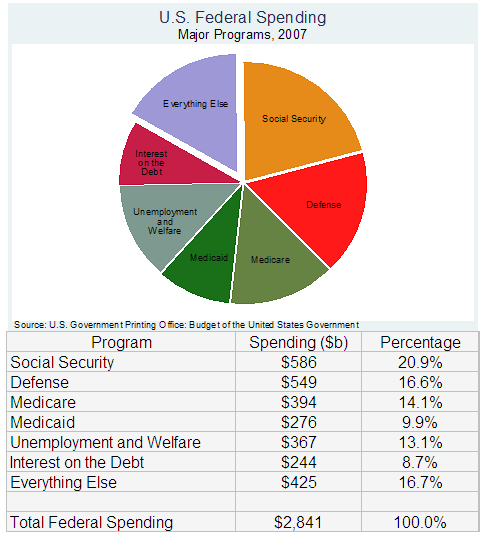
Wealhiest Americans

Standard of Living for wealthy Americans.
New book:
All the Money in the World: How the Forbes 400 Make--and Spend--Their Fortunes
more charts here
Tuesday, December 18, 2007
Austrian-style Business Cycle
ECONOMISTS cannot reliably forecast recessions. Nor can they detect for certain when a recession is in progress. Only after the fact do the official cyclical timekeepers identify the beginning and ending dates of a slump.
Though deficient in the powers of foresight and observation, economists do believe they know how to treat an economy on the brink of recession, as this one seems to be. They administer what non-economists know as the “hair of the dog that bit you.”
But booms not only precede busts, they also cause them. Bargain-basement interest rates are a potent stimulant. Borrowing more than they might at higher rates, people stretch. Businesses stock up on labor, machinery and buildings. Consumers buy cars and houses — houses, especially, these past five years. The G.D.P. takes flight.
Then unwelcome facts intrude. Easy money, it seems, was an illusion. Society was not so rich as it seemed. The prosperous future for which people had collectively prepared is slow to arrive. The inflation rate picks up. Supposedly creditworthy consumers and businesses turn out to be risky. They were creditworthy only so long as lenders were willing to advance them more and more funds at those ever-so-affordable low rates.
Now what to do? Why, slash interest rates to coax forth still more lending and borrowing. It’s the customary curative, seemingly as humane as it is politic.
And if recessions served no useful purpose, it might be. But recessions do. On Wall Street, they speak of “corrections.” What corrections correct are errors in judgment. So do recessions.
They allow the sorting out of boomtime error. They permit — indeed, force — the repricing of inflated assets. In a downturn, previously overpriced businesses, houses and buildings are made affordable again.
Naturally, people hate these painful, salutary interludes. Nobody likes insecurity, bankruptcy and joblessness. So the Fed keeps slashing interest rates. And this balm does mitigate the suffering. Homeowners and businesses refinance their debts. Fewer houses are thrown on an overstocked market.
Observe, however, that the great preceding illusion is undispelled. Prices have not come down as they should have. Neither has indebtedness. The architecture of the economy remains as it was. Land, labor and capital are still structured for an imagined glittering future.
Presently, a new upcycle does begin, but it’s slow off the mark. The world’s top economy seems curiously sluggish. And the economists and politicians ask, “What happened to America’s dynamic economy?” The answer: It’s wrapped in the coils of debt.
— James Grant, the editor of Grant’s Interest Rate Observer.
HT: Mises Blog
Though deficient in the powers of foresight and observation, economists do believe they know how to treat an economy on the brink of recession, as this one seems to be. They administer what non-economists know as the “hair of the dog that bit you.”
But booms not only precede busts, they also cause them. Bargain-basement interest rates are a potent stimulant. Borrowing more than they might at higher rates, people stretch. Businesses stock up on labor, machinery and buildings. Consumers buy cars and houses — houses, especially, these past five years. The G.D.P. takes flight.
Then unwelcome facts intrude. Easy money, it seems, was an illusion. Society was not so rich as it seemed. The prosperous future for which people had collectively prepared is slow to arrive. The inflation rate picks up. Supposedly creditworthy consumers and businesses turn out to be risky. They were creditworthy only so long as lenders were willing to advance them more and more funds at those ever-so-affordable low rates.
Now what to do? Why, slash interest rates to coax forth still more lending and borrowing. It’s the customary curative, seemingly as humane as it is politic.
And if recessions served no useful purpose, it might be. But recessions do. On Wall Street, they speak of “corrections.” What corrections correct are errors in judgment. So do recessions.
They allow the sorting out of boomtime error. They permit — indeed, force — the repricing of inflated assets. In a downturn, previously overpriced businesses, houses and buildings are made affordable again.
Naturally, people hate these painful, salutary interludes. Nobody likes insecurity, bankruptcy and joblessness. So the Fed keeps slashing interest rates. And this balm does mitigate the suffering. Homeowners and businesses refinance their debts. Fewer houses are thrown on an overstocked market.
Observe, however, that the great preceding illusion is undispelled. Prices have not come down as they should have. Neither has indebtedness. The architecture of the economy remains as it was. Land, labor and capital are still structured for an imagined glittering future.
Presently, a new upcycle does begin, but it’s slow off the mark. The world’s top economy seems curiously sluggish. And the economists and politicians ask, “What happened to America’s dynamic economy?” The answer: It’s wrapped in the coils of debt.
— James Grant, the editor of Grant’s Interest Rate Observer.
HT: Mises Blog
Monday, December 17, 2007

Recession in 2008?
 In the latest WSJ.com survey of economists, forecasters on average put the chance of a recession -- often defined as two straight quarterly declines in gross domestic product -- at 38%. That's the highest in more than three years, but the forecasters' best bet right now is that the U.S. will skirt a recession...
read the WSJ article
Saturday, December 15, 2007

Friday, December 14, 2007

Thursday, December 13, 2007
Producer Price Index up 3.2%
Wholesale prices saw their biggest jump in 34 years in November, according to a government inflation reading Thursday that came in much higher than forecast due to a record spike in energy prices.The Producer Price Index rose 3.2 percent, up from only a 0.1 percent rise in October.
Wednesday, December 12, 2007


Saturday, December 8, 2007

Friday, December 7, 2007


Thursday, December 6, 2007
Where Would You Prefer to Live?
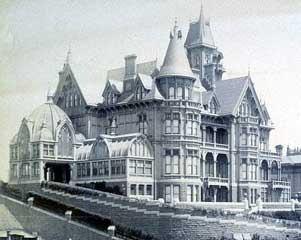
House A

House B

One house has hot and cold running water, central air conditioning, electricity and flush toilets. The other does not. One owner has a a computer, a high speed connection to the Internet, a DVD player with a movie collection, and several television sets. The other has none of these things. One owner has a refrigerator, a vacuum cleaner, a toaster oven, an iPod, an alarm clock that plays music in the morning, a coffee maker, and a decent car. The other has none of these. One owner has ice cubes for his lemonade, while the other has to drink his warm in the summer time. One owner can pick up the telephone and do business with anyone in the world, while the other had to travel by train and ship for days (or weeks) to conduct business in real time.
from Coyote Blog
House B

One house has hot and cold running water, central air conditioning, electricity and flush toilets. The other does not. One owner has a a computer, a high speed connection to the Internet, a DVD player with a movie collection, and several television sets. The other has none of these things. One owner has a refrigerator, a vacuum cleaner, a toaster oven, an iPod, an alarm clock that plays music in the morning, a coffee maker, and a decent car. The other has none of these. One owner has ice cubes for his lemonade, while the other has to drink his warm in the summer time. One owner can pick up the telephone and do business with anyone in the world, while the other had to travel by train and ship for days (or weeks) to conduct business in real time.
from Coyote Blog


Wednesday, December 5, 2007

Tuesday, December 4, 2007

National Debt: $9.13 trillion

The national debt — the total accumulation of annual budget deficits — is up from $5.7 trillion when President Bush took office in January 2001 and it will top $10 trillion sometime right before or right after he leaves in January 2009.
That's $10,000,000,000,000.00, or one digit more than an odometer-style "national debt clock" near New York's Times Square can handle. When the privately owned automated clock was activated in 1989, the national debt was $2.7 trillion.
read the article
Saturday, December 1, 2007

Friday, November 30, 2007


Thursday, November 29, 2007

3rd Quarter GDP revised: 4.9%

The government's initial estimate a month ago had GDP growing at an annualized rate of 3.9% in the third quarter. Economists expect the growth rate to be revised up to 4.9%, the fastest pace in four years....
read the Wall Street Journal article

Wednesday, November 28, 2007
Big Day on Wall Street

Stocks surged Wednesday, with the Dow industrials rallying 331 points, after comments from a Federal Reserve official sparked bets that the central bank will cut rates again at its next policy meeting.
read the CNN story
Theory of Everything?

An impoverished surfer has drawn up a new theory of the universe, seen by some as the Holy Grail of physics, which has received rave reviews from scientists.
Garrett Lisi, 39, has a doctorate but no university affiliation and spends most of the year surfing in Hawaii...
Subscribe to:
Posts (Atom)